
Redlined by Regulation: Assessing the Effect of Montgomery County's Rent Stabilization Law
Three years ago, Montgomery County adopted rent stabilization, which County leaders argued would protect tenants without discouraging new housing construction. The results suggest otherwise.
AOBA’s Redlined by Regulation paints a troubling picture of multifamily development activity since Rent Stabilization took effect in Montgomery County and what it means for the County’s housing supply and fiscal future. Below are the key takeaways:

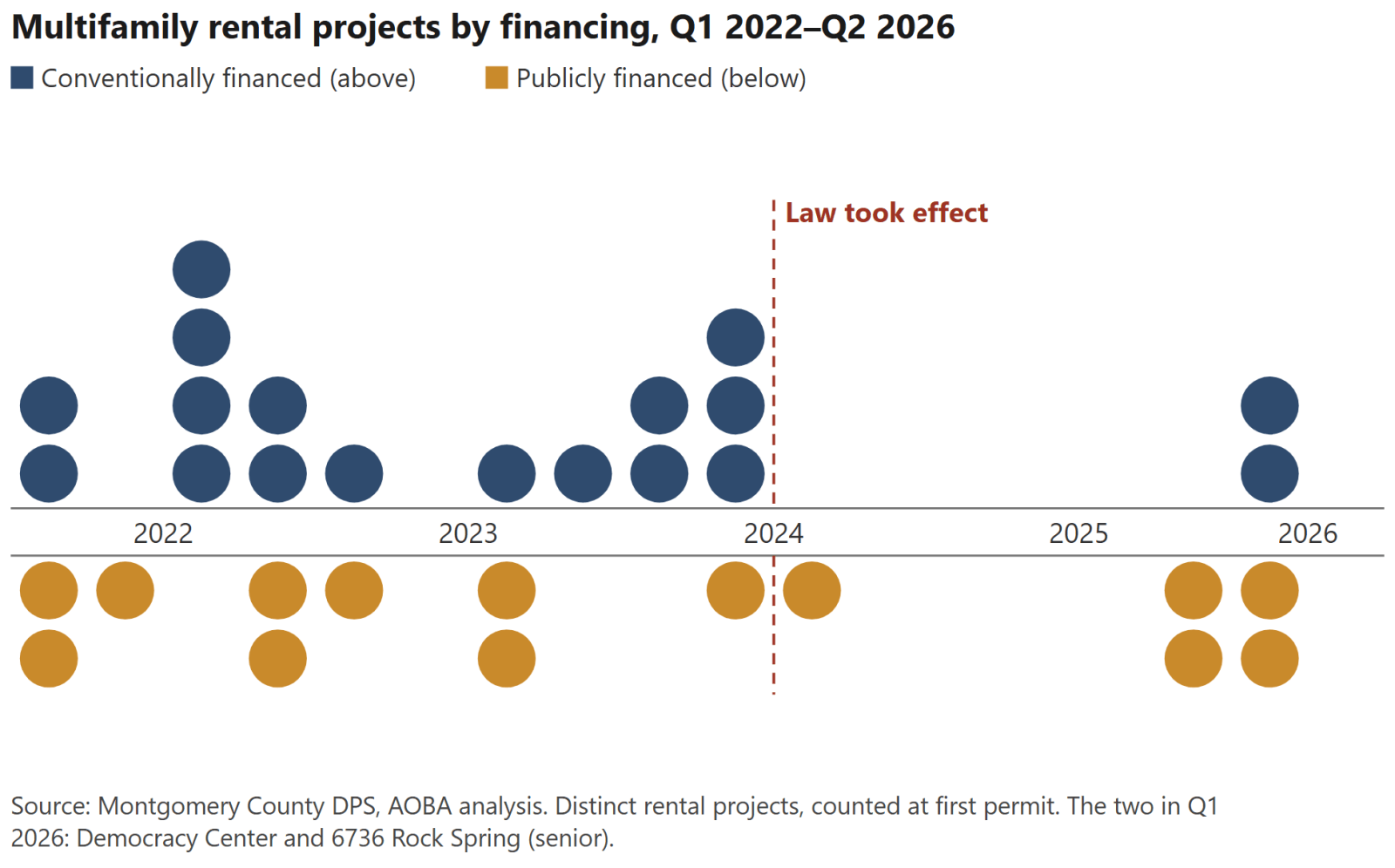
1. Rent stabilization coincided with a collapse in privately financed apartment development.
In the two years before the Rent Stabilization Law (RSL) became effective in July 2024, developers secured permits for 13 privately financed general occupancy multifamily projects in Montgomery County. In the two years since, only one such project has moved forward. Investors consider the County a bad bet for rental housing investment, and they point to the rent stabilization law as the primary driver of that sentiment. Publicly financed and subsidized multifamily developments, which have access to taxpayer-funded public financing programs, have continued to advance. The sharp decline is occurring among privately financed apartment projects.
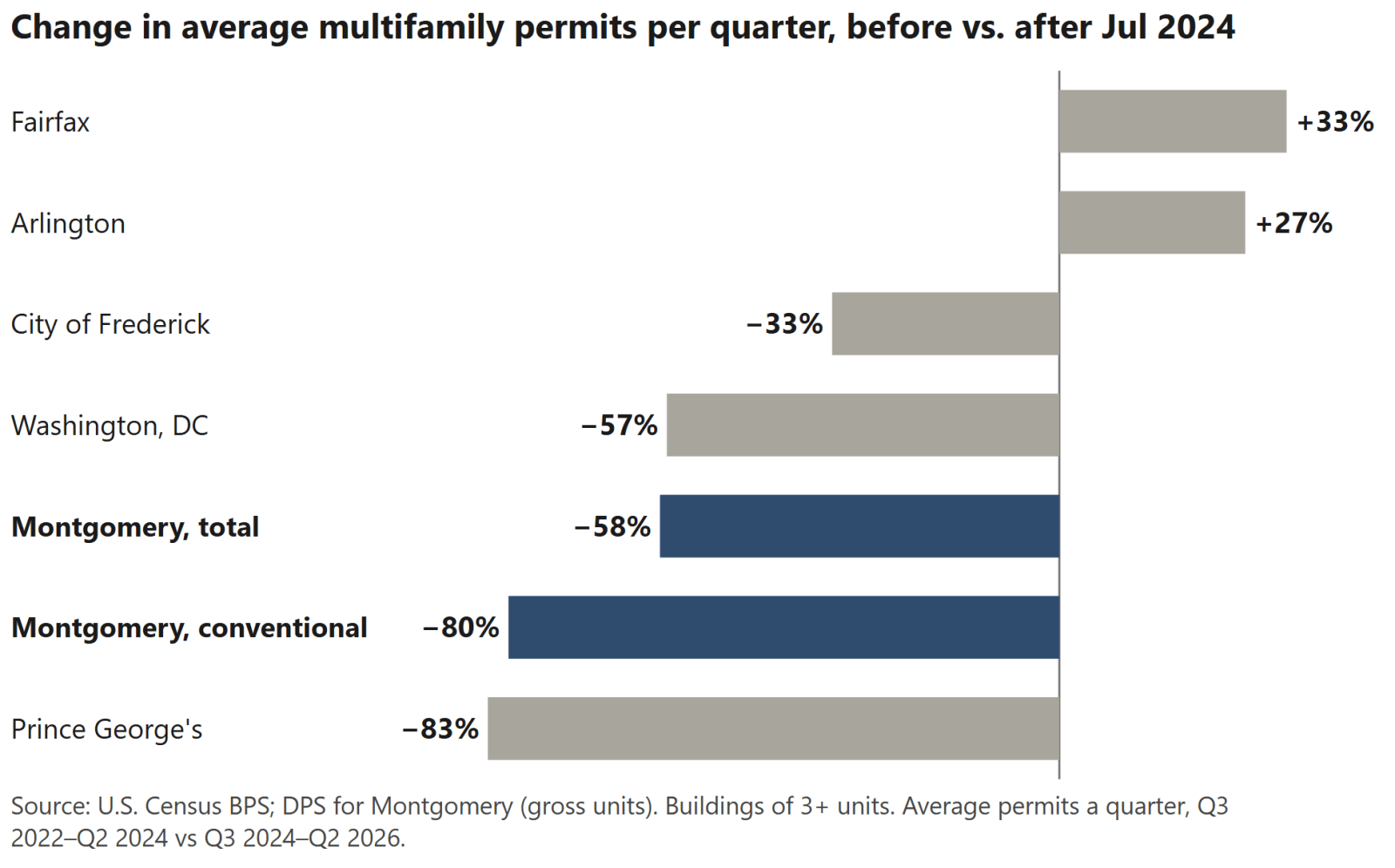
2. Montgomery County’s experience differs from neighboring jurisdictions.
While multifamily development activity has weakened significantly in Montgomery County, nearby jurisdictions including Fairfax County and Arlington County continue to attract apartment investment.
3. The fiscal consequences are substantial.
Reduced multifamily construction translates into lower impact tax collections, reduced recordation tax revenue, and slower growth in the property tax base. These losses affect the County’s ability to fund public services and infrastructure.
4. Montgomery County Public Schools (MCPS) could lose tens of millions in future funding.
AOBA estimates that, if current development trends continue, the County will forgo $135 million in tax revenue, $54 million to $57 million of which would have been earmarked for or appropriated to MCPS.
5. The evidence raises questions about whether the rent stabilization law should be amended.
While the rent stabilization law was intended to improve housing affordability without discouraging construction, permitting data show the County is failing to attract investor interest in much-needed apartment projects. Mounting evidence suggests the law should be amended to reverse this dynamic.
Bottom Line
Whether one supports or opposes rent stabilization, the development trends that have emerged since its enactment deserve serious attention. The report that follows examines the data and asks a fundamental question: Can Montgomery County afford to let this trend continue?